





The structure that holds everything together
The solar panel is the central element of any installation, but a single module alone is not enough to make the system truly work. To operate reliably for decades, panels must be precisely positioned at the correct angle, withstand seasonal loads, and maintain their geometry over time.
These requirements are handled by the mounting structure. It’s just as critical as the panel itself: if the frame is poorly assembled, the entire system loses efficiency or fails altogether. The mounting profile for solar panels is the foundation that holds everything together. It sets the direction, links modules into rows, and connects to structural supports. The configuration may vary depending on the surface—roof, façade, or ground—but the principle remains the same: accurate, stable assembly designed for long-term performance.
And this is where a key question arises: can aluminum be used for solar panels—as a load-bearing material responsible for the stability of the entire structure? Practice has long confirmed the answer. Aluminum is lightweight, corrosion-resistant, stable in heat and frost, easy to work with, and reliably maintains its shape. That’s why aluminum profiles have become the foundation for most modern solar mounting systems.
Types of Mounting Profiles for Solar Panels and Their Applications
Various types of aluminum profiles are used to mount solar panel systems. They differ in cross-section, installation method, and operating conditions. The choice of profile depends on the specific project. The most common types are rectangular and T-shaped guides with longitudinal slots. These are compatible with standard clamps and easily adapt to different mounting setups. The size of the profile is selected based on expected loads: wind, snow, and the structure's own weight. The wider the spans and the harsher the climate, the stronger the profile needs to be.
Aluminum profiles for solar panels also differ in how they are installed. Open profiles are the most common option. Recessed profiles are used where a flush or concealed mounting is required. Suspended solutions are less common and are typically used for awnings or unconventional architectural systems.
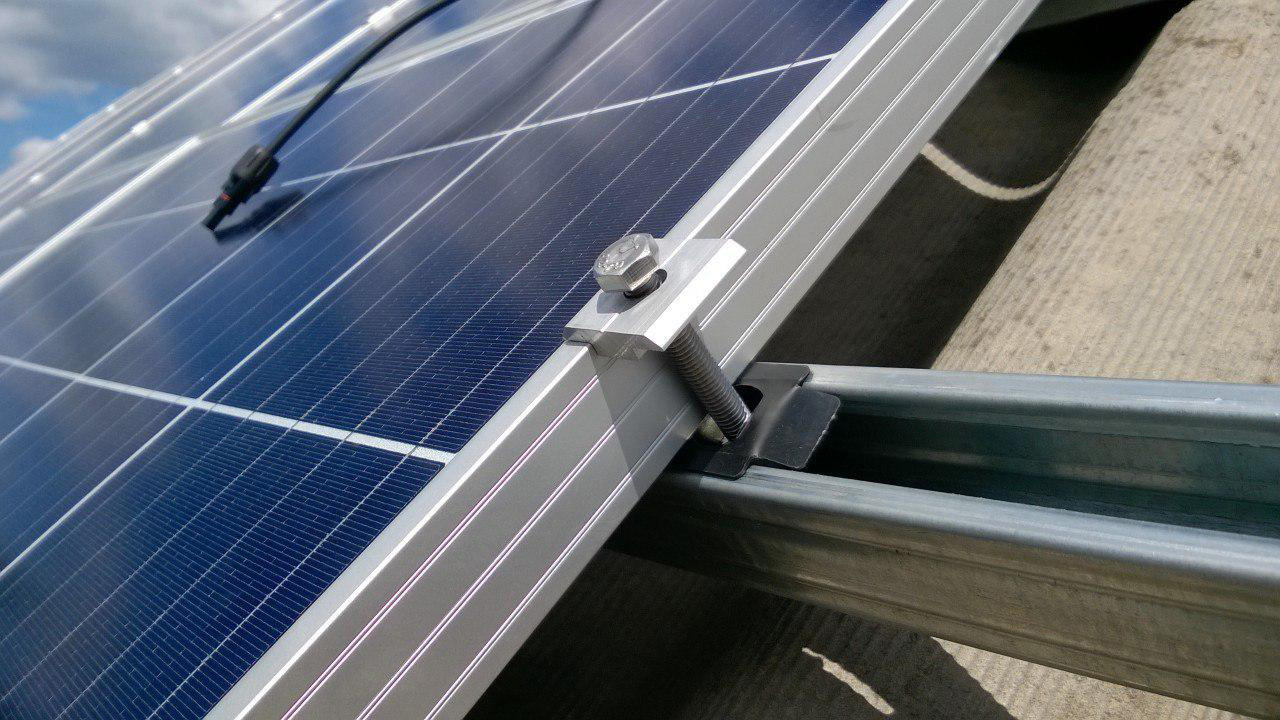
The mounting system for solar panels includes not only the main rails but also aluminum fastening components—clamps, connectors, and support modules. Clamps secure the modules at the edges and between panels, ensuring a firm fit without warping or damage. Like the profiles themselves, these solar panel mounting brackets often feature anodized coatings that improve aluminum’s natural corrosion resistance—particularly important in coastal areas, agriculture, or industrial environments.
Another key advantage of aluminum profiles is scalability. The system components can be joined, cut to length on-site, and paired with fasteners at the desired angle or mounting surface. This allows the installation to adapt to nearly any condition—without sacrificing structural integrity or alignment.
Aluminum profiles make it possible to mount solar panels on a wide variety of surfaces, from pitched and flat roofs to ground-based installations. Each case uses its own combination of supports and specific aluminum mounting hardware—adjustable brackets, ballast blocks, posts, or anchors. This flexibility allows the system to be tailored to site-specific lighting, orientation, architectural constraints, and climate conditions.
An added benefit of these systems is their ease of assembly. Components connect without welding, can be trimmed on-site, and are assembled by hand. This simplifies installation and reduces the risk of mechanical damage or misalignment. Geometry is preserved, structural strength is maintained, and the system remains reliable throughout its design life.

