




Product Catalog

In an era when modern architecture strives for excellence not only in functionality but also in aesthetic expression, aluminum emerges as the ideal material that combines both these characteristics. Thanks to its unique properties, aluminum transforms urban landscapes, creating architectural masterpieces that amaze the imagination with their beauty and innovation.

Aluminum, one of the most abundant elements in the Earth's crust, possesses a number of superior properties, making it an ideal choice for technological solutions in various fields. Its lightness and strength allow the creation of equipment that is easily transportable and highly resistant to mechanical damage.

In a world where scientific progress and innovation define the future, aluminum serves as a key element driving the advancement of cutting-edge technologies. Thanks to its unique properties, this metal has played a defining role in some of the most exciting technical breakthroughs of our time.
-347x208.png)
Aluminum is a metal that has a wide range of applications in almost all industries due to its strength, adaptability, and versatility. The advantages of aluminum alloys and products made from them include lightweight, excellent electrical and thermal conductivity, high corrosion resistance, and plasticity. Due to its unique properties, aluminum is more cost-effective than other materials.

The primary purpose of watercraft is recreation, sports, hunting, and fishing on the water. For this, the lightness and strength of the material from which the boat is made are very important. In addition, when interacting with water, metal is usually subjected to corrosion, which is intensified in a saline environment.

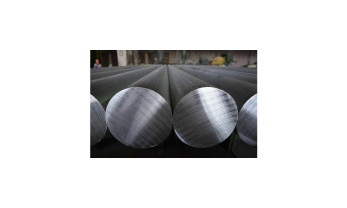
Aluminum rods are one of the most popular and versatile aluminum products due to their ease of processing, excellent durability characteristics, and wide range of applications.

Aluminum plinths are a perfect combination of quality and aesthetics. Aluminum is easily processed, which allows you to create products of various shapes, colors and sizes from it. The beneficial properties of this metal also make it an excellent material for outdoor use.

To achieve the required strength characteristics, aluminum profiles undergo various types of heat treatment after extrusion. Thermal treatment of aluminum is a process that enhances the strength and rigidity of a specific subgroup of aluminum alloys, namely processed and cast alloys that undergo dispersion hardening.

Aluminum profiles for display cases consist of various sets or systems of aluminum profiles that differ in their configuration and components, and are connected using special hardware.
The degree of strength of the mentioned aluminum alloys is determined by the amount, size and uniformity of distribution of magnesium silicide (Mg2Si) in aluminum, which, in turn, is determined by the chemical composition of the alloy and the efficiency of heat hardening of the profiles - quenching and ageing.
Request a call back
Thank you
Your application is accepted! We will contact you soon.
Shopping Cart
Cart is empty


